How to Protect Your Jeep JL From a Relay Attack (Keyless Entry Theft)
By Trail Tested TX | Houston, TX
If you own a JL Wrangler with keyless entry, this is worth five minutes of your time. A relay attack Jeep JL owners are dealing with right now is a real, active problem — there’s a lengthy, ongoing thread on JL Wrangler Forums with dozens of replies from owners dealing with exactly this. The good news: the fix is simple and cheap.
Relay Attack Jeep JL: What It Actually Is
Here’s the short version. Your key fob is constantly emitting a low-power signal that your Jeep listens for — that’s what lets you walk up and unlock the doors, or push the start button, without ever pulling the fob out of your pocket.
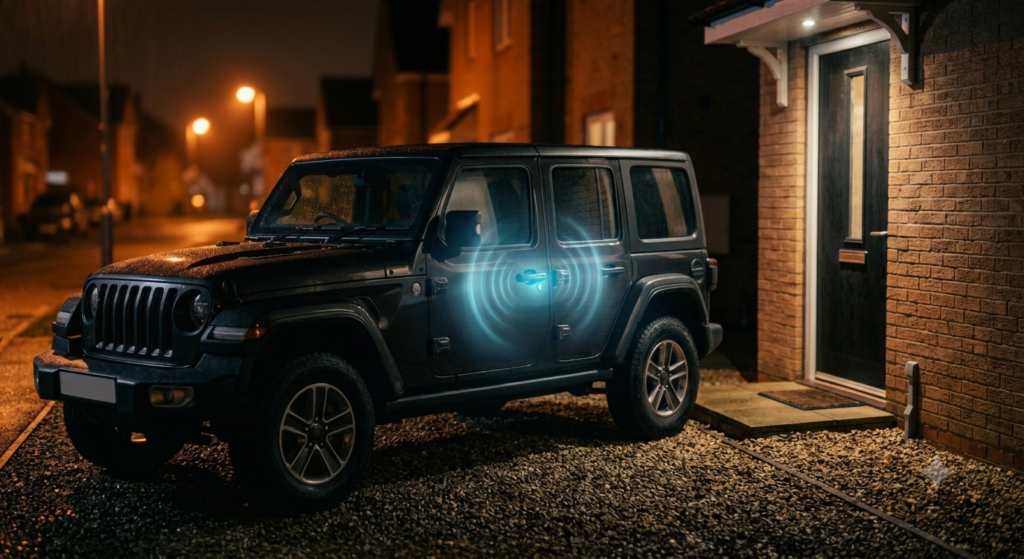
A relay attack exploits that. Two people work together: one stands near your house with a receiver that picks up your fob’s signal (it doesn’t need to get inside — fobs sitting near an exterior wall or window are enough), and relays that signal to a second device held by their partner standing next to your Jeep. As far as your Jeep is concerned, your actual key is right there. Doors unlock, engine starts, and they drive off — no smashed window, no hot-wiring, no visible break-in at all.
It sounds like a movie plot, but the equipment to do this is cheap and widely available, and it’s actively being used against JL Wranglers, Gladiators, and 392s.
The Simple Fix: Block the Signal
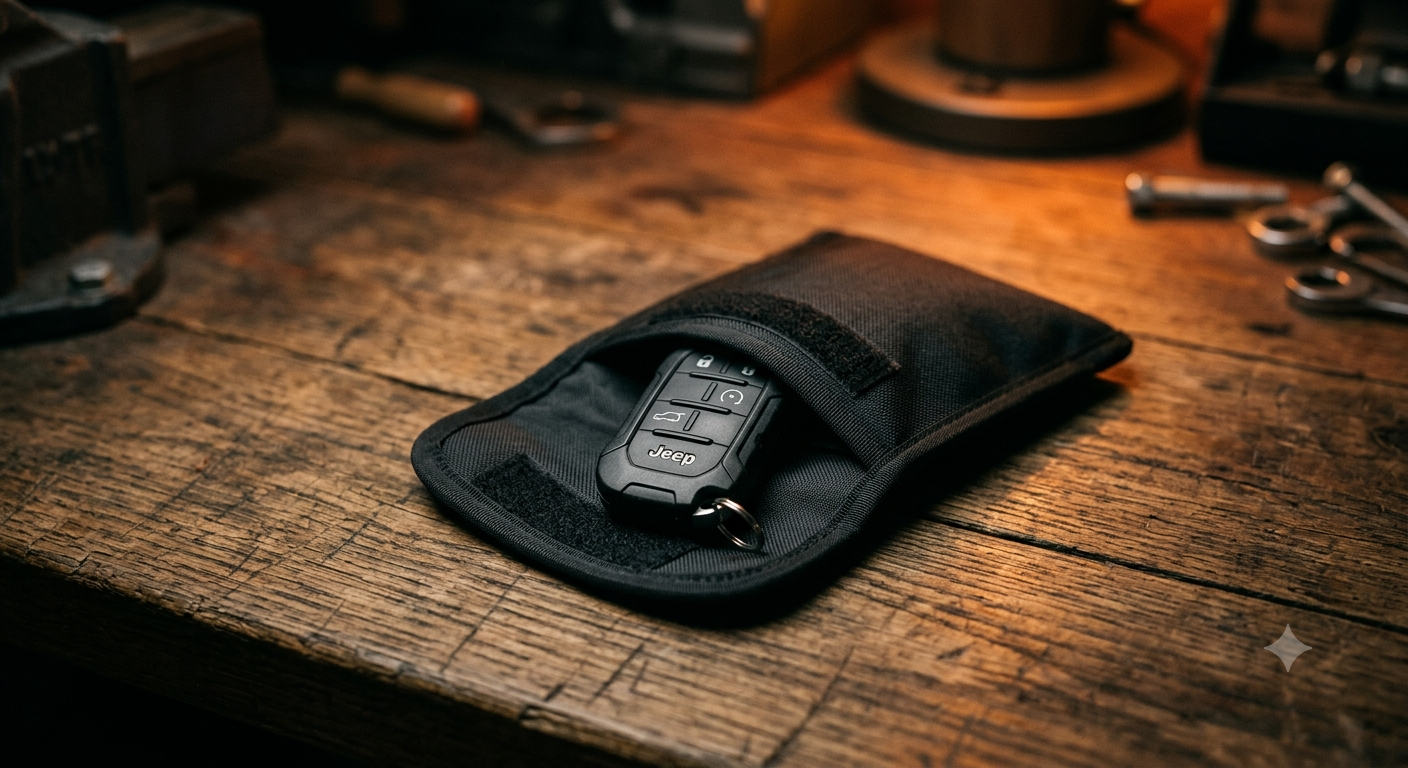
You don’t need to disable keyless entry or carry your fob wrapped in tinfoil everywhere — you just need to block the signal when you’re not using it, which is most of the day. That’s what a Faraday pouch or Faraday box does.
- Faraday pouches are small fabric sleeves lined with signal-blocking material — cheap, portable, easy to keep by the door.
- Faraday boxes are rigid metal or metal-lined containers — a popular DIY option among JL owners is literally just a solid metal tin (no plastic window) that you toss your keys into by the door every night.
Either works. What matters is that it actually blocks the signal completely — a cheap or worn-out pouch can leak just enough to still be vulnerable.
Two I’d point you toward — the price difference is small, so it really comes down to preference:
- Lanpard Faraday Pouch (2-pack) — around $9, backed by tens of thousands of reviews. Blocks RFID, Bluetooth, WiFi, and GPS, so it works for phones and AirTags too, not just key fobs.
- Mission Darkness Faraday Bag — around $15, the same forensic-grade shielding standard used by law enforcement. If you want zero doubt it’s blocking the signal completely, this is the one.
How to Test Yours
This is the part most people skip, and it’s the difference between a false sense of security and an actual fix:
- Put your fob in a cupholder inside the Jeep and press the dash start button — it should start.
- Now put the fob inside your Faraday pouch or box, close it up fully, and try again — it should not start.
If it still starts with the fob sealed inside, your container is leaking signal and isn’t doing its job. Some owners have found that certain wallets and purses marketed as “Faraday-lined” don’t actually block the signal — when in doubt, test it yourself rather than trusting the label.
Other Layers Worth Adding
Security works best in layers — a Faraday container is your first line of defense, but a few other things are worth doing alongside it:
- Store keys away from exterior walls and windows. Signal strength drops fast with distance, so keeping your key fob 15-20 feet deeper into the house (rather than hanging right by the front door) meaningfully weakens what a relay device outside can pick up, even without a Faraday container.
- A steering wheel lock (like a Club) is a low-tech but real deterrent — it doesn’t stop the Jeep from starting, but it makes driving off a lot harder and less appealing to someone looking for a quick, quiet theft.
- A hood lock and locking gas cap, keyed alike, closes off a couple of other common entry/tamper points.
How the Tazer JL Mini’s PIN Lock Fits In
If you’ve already got a Tazer JL Mini installed, you actually have another real layer of protection already sitting in your dash: the PIN Lock feature.
PIN Lock requires a steering wheel button sequence to be entered before the vehicle can be driven — set once from the Live Settings menu. If someone manages to get a valid key signal (relayed or otherwise) and gets the engine started without knowing your PIN, shifting into gear locks the brakes and kicks off a Light Show until the correct PIN is entered. There’s also a built-in “Carjack Mode” that keeps the vehicle immobilized if it’s left running and someone drives off without the key present.
It’s not a replacement for blocking a relay attack Jeep JL owners are exposed to at the source with a Faraday container — but it’s a meaningful backup layer if a signal ever does get through, and it’s already sitting there unused on a lot of Tazer installs. Worth setting up if you haven’t already.
Bottom Line
A Faraday pouch or box costs next to nothing, takes five minutes to start using, and closes off the single most common relay attack Jeep JL owners are facing right now. Test it to make sure it actually works, keep your spare keys in one too, and layer on a steering wheel lock or the Tazer’s PIN Lock if you want extra peace of mind.
Affiliate Disclosure: Some links in this post may be affiliate links. If you purchase through them, Trail Tested TX may earn a small commission at no extra cost to you.